• It has been a high-stakes start to 2026 for the crypto world. While the “four-year cycle” theory is being called into question, Bitcoin is currently navigating a period of intense volatility and institutional evolution.

    As of February 8, 2026, here is the modern state of Bitcoin:

    1. Market Snapshot: The “De-Risking” Phase

    Bitcoin is currently trading around $71,195, staging a modest relief rally after a bruising start to the year.

    • The 2025 Hangover: Contrary to historical post-halving “moon” cycles, 2025 ended in the red (down roughly 6%), shattering the traditional four-year cycle narrative.
    • Recent Slump: The price has fallen nearly 20% year-to-date. In early February, it dipped as low as $63,000—nearly half of its all-time high of $126,210 reached in October 2025.
    • The Cause: Analysts point to heavy profit-taking, uncertainty over Federal Reserve interest rate cuts, and “risk-off” sentiment following the 2024 U.S. election hype.

    2. The “Quantum Scare” vs. Reality

    A major theme dominating the headlines this week is Quantum Computing vulnerability.

    • The Alarm: Speculation that quantum computers could break Bitcoin’s encryption recently contributed to market jitters.
    • The Rebuttal: A fresh report from CoinShares (Feb 8) argues these fears are “overblown.” They estimate only about 10,200 BTC in legacy addresses are at real risk, and the technology required to break Bitcoin’s code is likely at least a decade away.

    3. Regulatory & Institutional Shifts

    The era of “wild west” trading is being replaced by a sophisticated financial infrastructure:

    • The GENIUS Act: Passed in 2025, this landmark U.S. legislation has provided a federal framework for stablecoins, which now act as the primary “on-ramp” for institutional capital.
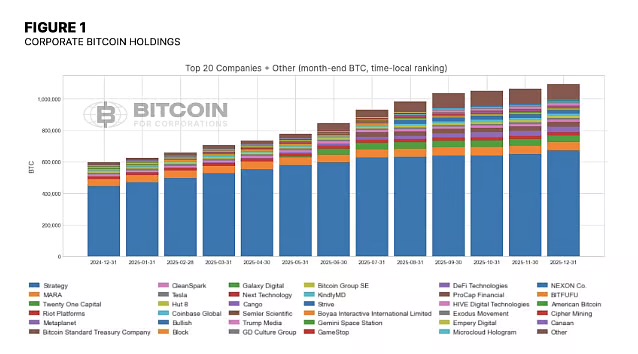
    • Strategic Reserve Status: High-level discussions continue regarding Bitcoin as a strategic treasury asset for corporations and even small nation-states, moving it away from being a “speculative trade.”
    • Consolidation: The industry is maturing through M&A. Major moves like Coinbase’s acquisition of Deribit show that companies are buying their way into institutional-grade infrastructure.

    These are opinions and don’t represent HearsayOnlineCo ©️©️™️ and its subsidiaries

  • Bitcoin is being used by the working class for typical tasks. And these companies are okay by using it.

  • Bitcoin Development in 2025-2026

    Bitcoin’s core development has shown strong momentum entering 2026:

    Developer Activity Surge Bitcoin Core development rebounded in 2025, with contributor count growing from approximately 112 to 135 individuals, and mailing list activity increasing by 60% from the previous year Buffalo News. Developers modified approximately 285,000 lines of code in 2025 Buffalo News, demonstrating robust ongoing development.

    Major Technical Updates

    • Bitcoin Core v30.0 (October 2025): This major release increased the OP_RETURN data limit from 80 bytes to nearly 4 MB per output, allowing for more robust data anchoring like document timestamps directly on-chain Buffalo News
    • Cluster Mempool (Expected Q1 2026): This upgrade will replace the current linear transaction pool model with a clustered approach, where transactions are grouped by fee dependency, improving fee estimation and block construction Buffalo News
    • Quantum Resistance Research: While expert estimates suggest a quantum computer powerful enough to break Bitcoin’s cryptography is unlikely before 2030 at the earliest, research on quantum risk and community preparedness efforts will likely accelerate in 2026 Buffalo News

    Institutional Integration Grayscale expects bipartisan crypto market structure legislation to become U.S. law in 2026, which will bring deeper integration between public blockchains and traditional finance Buffalo News. US spot Bitcoin ETFs recorded net inflows in seven months of 2025, accumulating over $22.4 billion between January and November WGRZ.

    Why Users Choose Alternative Coins (Altcoins)

    Despite Bitcoin’s dominance, users select altcoins for several compelling reasons:

    1. Speed and Transaction Costs

    Some altcoins are designed for faster and cheaper transfers compared to Bitcoin, allowing more transactions per second Patch. For example, XRP settles transactions within 3-5 seconds and reduces transaction costs significantly compared to Bitcoin Patch.

    2. Smart Contract Functionality

    Ethereum was first conceived in 2013 to help provide developers the means to build decentralized apps using smart contracts WTNH. Other altcoins like Cardano and Polkadot provide alternative smart contract environments, often claiming improved security and scalability over Ethereum WTNH.com.

    3. Enhanced Privacy Features

    While Bitcoin transactions are pseudonymous and traceable, Monero uses Ring Signatures, Stealth Addresses, and Confidential Transactions to hide the sender, receiver, and transaction amounts, and Zcash allows users to choose between transparent and shielded transactions WTNH.com.

    4. Innovation and Experimentation

    Altcoins allow developers to explore new ideas including consensus mechanisms and governance models, expanding the boundaries of what is possible for decentralized finance WTNH. Many altcoins have adopted Proof-of-Stake or Delegated Proof-of-Stake mechanisms as more energy-efficient alternatives to Bitcoin’s Proof-of-Work.

    5. Investment Strategy – Higher Risk, Higher Reward

    Investors seeking outsized short-term returns may allocate to altcoins during bullish cycles, though they should be prepared for steep drawdowns if market sentiment shifts or projects underdeliver New Haven Independent. Given the volume of altcoins, some retail investors consider them to be a way to experiment with or gain exposure to digital assets despite the potential volatility WTNH.

    6. Specialized Use Cases

    Some altcoins revolve around a specialized ecosystem, acting as a native token that unlocks unique features or incentivizes participation within a community Patch. This includes DeFi protocols, gaming tokens, governance tokens, and industry-specific applications.

    7. Accessibility and Lower Entry Price

    Altcoins often have lower individual token prices, making them psychologically more accessible to retail investors who may feel Bitcoin is “too expensive” even though fractional ownership is possible.

    The Bitcoin-Altcoin Relationship

    Most altcoins can’t be purchased directly using fiat currencies; instead, the majority of buyers purchase some Bitcoin first, and then trade it for their altcoin of choice New Haven. This creates a symbiotic relationship where an altcoin’s value is often measured against the price of Bitcoin, so the price of altcoins could go down if Bitcoin goes down, and conversely go up if Bitcoin goes up New Haven.

    Investment Approaches

    Some investors use a Core-Satellite Model, allocating 70-90% to Bitcoin for stability, with the remainder spread across a handful of high-conviction altcoins, or group tokens by sector like DeFi, gaming, and infrastructure New Haven Independent.

    The choice between Bitcoin and altcoins ultimately depends on individual goals: users prioritizing a self-sovereign, inflation-resistant asset often choose Bitcoin exclusively, valuing its security and network effects, while those interested in building decentralized applications, experimenting with DeFi, or minting NFTs gravitate toward smart contract platforms

  • Kalshi, the first federally regulated prediction market exchange in the United States, has rapidly become one of the most significant players in the broader Bitcoin and cryptocurrency narrative. Founded in 2018 by co-founder and CEO Tarek Mansour — an MIT graduate and former quantitative trader at Goldman Sachs and Citadel — Kalshi was built on a simple but powerful idea: that people should be able to trade directly on the outcomes of real-world events without relying on complex financial instruments. Under Mansour’s leadership, the company navigated a grueling regulatory battle with the Commodity Futures Trading Commission before securing approval as a Designated Contract Market, positioning itself at the intersection of traditional finance and the fast-moving crypto industry.

    Bitcoin has become a cornerstone of Kalshi’s platform, both as a trading subject and as a financial tool for its users. Kalshi introduced Bitcoin deposits in early 2025, allowing users to fund their accounts directly from their wallets via a partnership with Zero Hash. Shortly after, the platform expanded to accept Solana, USDC, and other cryptocurrencies, with crypto deposits offering faster funding and higher deposit limits of up to $500,000. This move was a deliberate strategy to attract crypto-native users and increase participation in Kalshi’s over 50 Bitcoin-specific prediction markets, where traders can wager on price thresholds, legislative developments surrounding cryptocurrency, and major adoption milestones.

    Perhaps the most dramatic development in Kalshi’s Bitcoin-related trajectory came in late 2025, when the platform launched tokenized versions of thousands of its prediction markets on the Solana blockchain. Kalshi’s head of crypto, John Wang, explained that this tokenization strategy was designed to tap into billions of dollars of on-chain liquidity, allow developers to build third-party applications on top of Kalshi’s markets, and help maintain competitive pricing against rivals like Polymarket. By integrating with Solana infrastructure providers Jupiter and DFlow, Kalshi aggregated its on-chain and off-chain liquidity into a single pool — a first for any prediction market in the world. Within days of launch, the platform had already surpassed $2.8 million in volume on Solana alone, underscoring the appetite among crypto traders for regulated, event-based trading.

    CEO Tarek Mansour has been the driving force behind Kalshi’s aggressive expansion into the crypto space. Born in California and raised in Lebanon, Mansour returned to the United States to study at MIT, where he earned degrees in computer science and mathematics. His early career at elite financial firms gave him a keen understanding of how institutions use complex derivatives to approximate exposure to future events — a process he saw as unnecessarily cumbersome and expensive. That insight became the founding vision of Kalshi, and today it manifests in the platform’s crypto strategy. Mansour has also announced plans to host the inaugural Prediction Market Conference in March 2026, an event designed to bring together researchers, economists, policymakers, and traders to discuss governance, regulatory frameworks, and scalable use cases across crypto, asset management, and policy sectors.

    The broader significance of Kalshi’s Bitcoin-related moves cannot be understated in the context of how prediction markets are maturing alongside the cryptocurrency industry. In 2025, Kalshi processed $23.8 billion in total notional volume — growth exceeding 1,100% year over year — and closed a $1 billion funding round that valued the company at $11 billion. The platform secured partnerships with CNN, CNBC, Coinbase, Phantom wallet, and even Google, which began integrating Kalshi prediction data into its search and finance platforms. As Bitcoin continues to oscillate between institutional enthusiasm and market volatility, Kalshi stands as a unique bridge: a place where traders can not only deposit and use Bitcoin as currency but also bet on its future with the backing of federal regulation. Under Mansour’s vision, Kalshi is not simply a prediction market that happens to involve crypto — it is becoming a defining force in how the world prices, trades around, and understands Bitcoin’s evolving role

  • Bitwise Analysis: Despite short-term pain, Bitwise CIO Matt Hougan expressed that the “stars are aligned for a good 2026,” projecting a $75K-$100K range for Q1, and arguing that central banks will eventually own more Bitcoin than gold.

  • CEO Bankruptcy Status: Coinloan OÜ was officially declared bankrupt on June 14, 2023, following an initial suspension of operations in April 2023.

    CEO’s Role: Alex Faliushin stated in a June 2023 blog post that the company would cooperate with the court-appointed trustee and work to keep user accounts functional where possible.

    Cause of Failure: The insolvency was heavily influenced by market instability and, as reported, a potential connection to the collapse of the Vauld crypto exchange.

    Impact on Users: The platform, previously a licensed entity in Europe, halted withdrawals, leading to legal actions to manage claims, with updates continuing into 2025 regarding new claim opportunities. 

  • of the most significant developments driving Bitcoin’s momentum has been the approval and rapid growth of Bitcoin ETFs (Exchange-Traded Funds). These products allow everyday investors to gain exposure to Bitcoin through traditional brokerage accounts without needing to store or secure the cryptocurrency themselves. Since their launch, Bitcoin ETFs have attracted billions of dollars in inflows, signaling that institutional money is flowing into crypto at an unprecedented pace and lending the asset a level of legitimacy it hadn’t previously enjoyed.

    At the same time, Bitcoin’s halving events continue to be one of the most closely watched phenomena in the crypto world. Every roughly four years, the reward for mining a new Bitcoin block is cut in half, reducing the rate at which new coins enter circulation. Historically, these halvings have been followed by significant bull runs as supply scarcity meets growing demand — a dynamic that many analysts believe will continue to shape Bitcoin

  • gambling specifically because of regulatory arbitrage and anonymity. Traditional online gambling faces heavy restrictions in many jurisdictions, and bitcoin casinos often operate in legal gray areas that allow people to gamble without the identity verification required by licensed operators. These users value the ability to gamble without creating extensive digital paper trails or governmental oversight.

    The Degenerates (a term some gamblers use self-referentially) are problem gamblers who have found a new venue. The 24/7 accessibility, instant deposits, and lack of banking controls that might limit their gambling make bitcoin casinos particularly dangerous for people struggling with addiction. The volatility of bitcoin itself can add another layer of compulsive behavior, where users are chasing losses in both their gambling and their cryptocurrency holdings.

  • Major Exchange Hacks: The Bybit hack drained about $1.4 to $1.5 billion in ETH from cold wallets, making it the largest single crypto theft to date Webopedia. By mid-2025, reported losses from crypto hacks already exceeded $2.17 billion, later climbing above $3 billion Webopedia.

    $19 Billion Bitcoin Liquidation: October saw a historic $19 billion Bitcoin liquidation cascade triggered by tariff shocks, marking the largest single-day deleveraging event in Bitcoin history Webopedia.

    Czech Government Scandal: Czech Justice Minister Pavel Blažek accepted a Bitcoin donation worth approximately $45 million from a convicted criminal, leading to his resignation in May 2025 Wikipedia.